

With more than two decades working in the veterinary and aquaculture medicine industry, Ms. Lam Thuy Ai - General Director of Mebi Farm Joint Stock Company - deeply understands the most core values for the health of livestock, the community, and the sustainability of the environment.
“Why do Vietnamese people still not have many opportunities to access international-standard products at reasonable prices right in their homeland?”, that concern was the motivation for her and her associates to embark on the journey of creating Mebi Farm.
From those concerns, a closed-loop livestock ecosystem applying modern technology from Japan was born. This is the answer to creating absolutely safe and completely transparent products, starting from the roots of the farm itself.
01
FEELINGS
AND CONCERNS
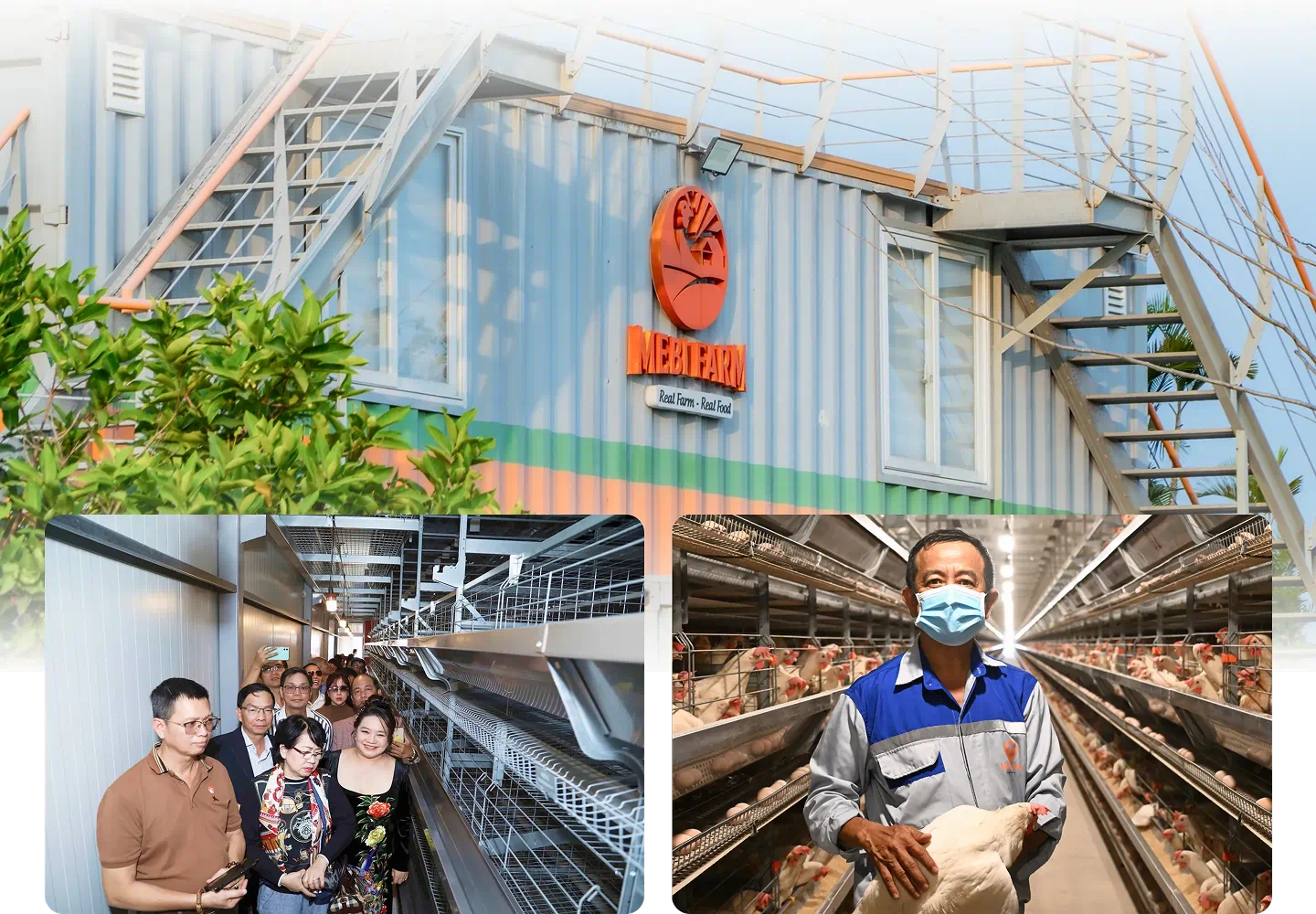
Located in Son My commune, Lam Dong province, Mebi Farm's 72-hectare farm is methodically invested and isolated from residential areas. This strategic location not only helps protect the natural ecosystem but also establishes an absolute biosecurity “shield” for the chicken flock. The infrastructure system here is synchronously built, from the pullet houses, laying houses to modern functional subdivisions: water supply and wastewater treatment stations, air control systems, automatic egg collection and packaging areas, animal feed mixing stations along with optimal renewable solar energy systems.
All activities at the farm revolve around the core value system with 6 solid green pillars: Clean water - Fresh air - Vegan feed - Renewable energy - Thorough waste treatment - Effective waste recycling. This is the formula that helps Mebi Farm maintain the balance between food production and environmental protection.
Ms. Lam Thuy Ai passionately shared: “Technology or equipment can be bought, but a green agricultural model only stands firm thanks to discipline and absolute transparency. From breeding stock, operating processes to ESG standards, everything must be standardized to create sustainable value.”

02
BUILDING TRUST
FROM THE PINKY EGG
Returning to the farm after nearly a year, we were amazed by the poetic scenery appearing in the middle of the acacia forest. With lush green vegetable gardens, trellises of gourds and melons laden with fruit beside the crystal-clear lake, this place looks more like a high-end resort than a simple livestock farm. The production space is quiet, the environment is absolutely clean with no odor or waste; instead, it is an impressive image of a modern, automated farm.
“While traditional livestock farming still relies heavily on experience, we choose data as the foundation, technology as the tool, and standardization as the operational discipline,” Ms. Ai shared. She still vividly remembers the early days when the cooling system malfunctioned; the entire team had to stay up all night, understanding that if the temperature deviated by even one degree, the chickens would be stressed and the egg quality would drop immediately.
Those relentless efforts crystallized into indescribable happiness. Ms. Ai smiled and recalled: “We were extremely moved when holding the first Pinky egg with its natural pink color and thick, nutrient-rich yolk.”
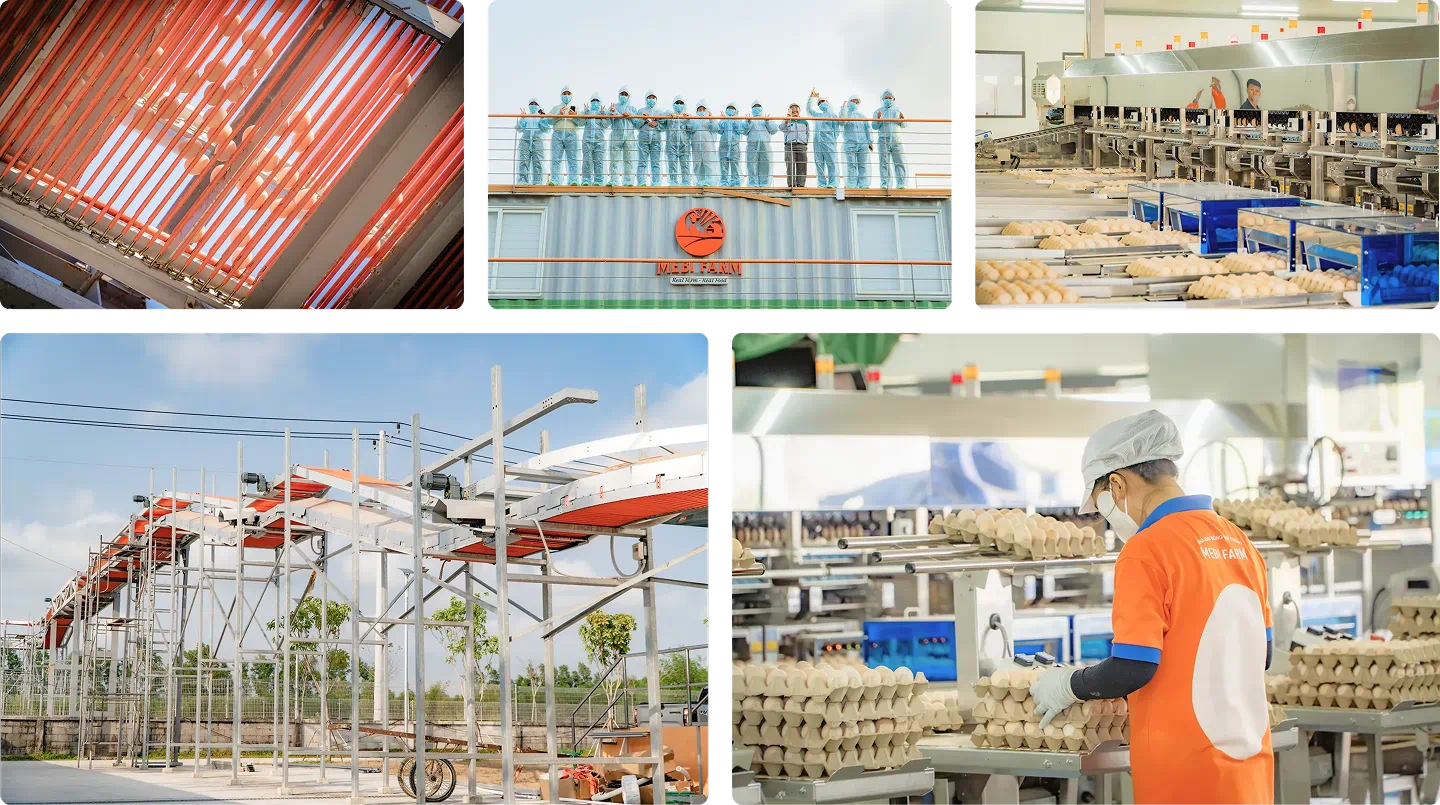
The livestock ecosystem at Mebi Farm is completely automated, from feeding, egg harvesting, packaging to ideal environmental control. Thanks to IoT sensor systems monitoring temperature, humidity, and light every minute, and the support of artificial intelligence (AI), all production indicators are optimized, ensuring precise traceability for each egg when reaching consumers.
03
SMART ECOSYSTEM
AND SUSTAINABLE DEVELOPMENT

Mebi Farm establishes a strict biosecurity control system through 4 levels, from the administrative area to the coops. The health of the chickens is strictly traced from the parent generation, the hatchery to transportation. Chickens are strictly controlled for diseases from 1 day old to ensure physical uniformity.
Simultaneously, feed sources have records traced by batch, while drinking water is 100% filtered through the UF system and periodically tested. In care activities, the unit applies a one-way principle, with logs fully recorded by staff intensively trained in food safety.
The laying hens here are cared for in an ideal space with temperature stably maintained at 26 - 28°C. They enjoy fresh feed produced daily and drink pure UF-filtered water that still retains natural minerals, helping optimize the nutritional content of each egg.
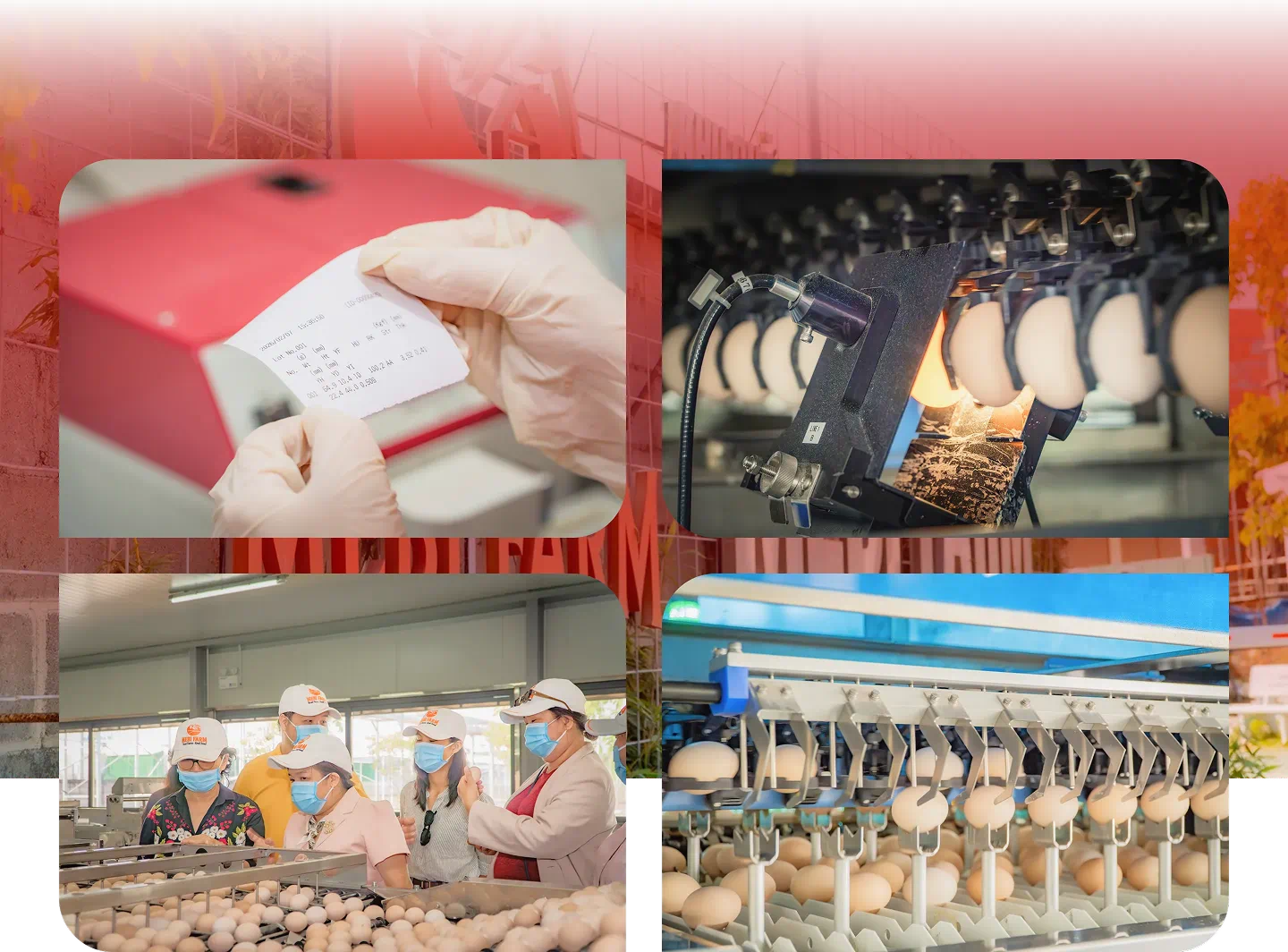
Immediately after the chickens lay eggs, the eggs are automatically collected and transferred directly to the processing and packaging center. The entire farm is operated by talented automation engineers. Thanks to this investment, the egg's journey from leaving the nest to the supermarket shelf is virtually free of direct human intervention, ensuring the highest purity and safety.
At the factory, eggs are transported by conveyors, candled and classified accurately through modern Japanese equipment, then pass through a UV disinfection system before packaging. The entire operational process strictly complies with ISO 22000:2018 standards, comprehensively applied to all stages: from rearing pullets, laying hens to managing feed, clean water, and input materials.
“A safe egg must be safe from within, originating from a healthy flock raised in an environment strictly controlled in terms of both feed and water. For us, transparency in traceability from farm to table is the strongest commitment to give consumers absolute peace of mind,” Mr. Nga emphasized.
With a scale of over 1.2 million laying hens and 400.000 pullets raised in a closed-loop model, Mebi Farm aims to supply 375 million eggs per year, step by step contributing to the new rural construction of Son My commune, Lam Dong province.